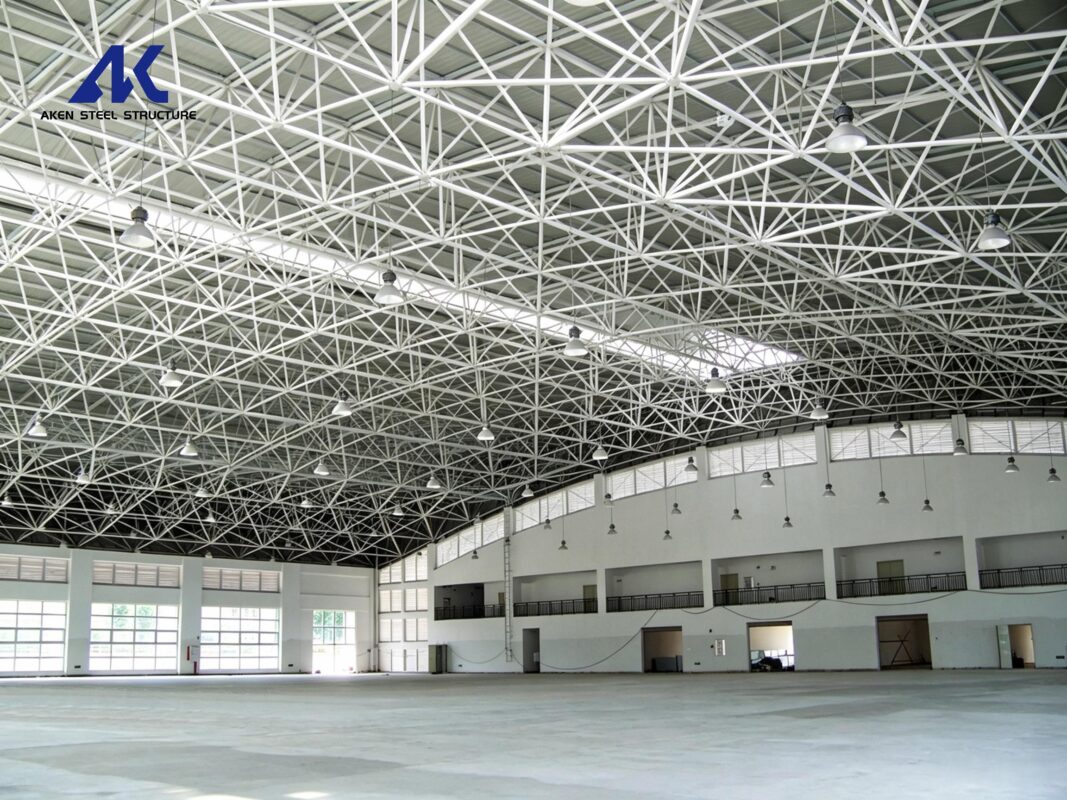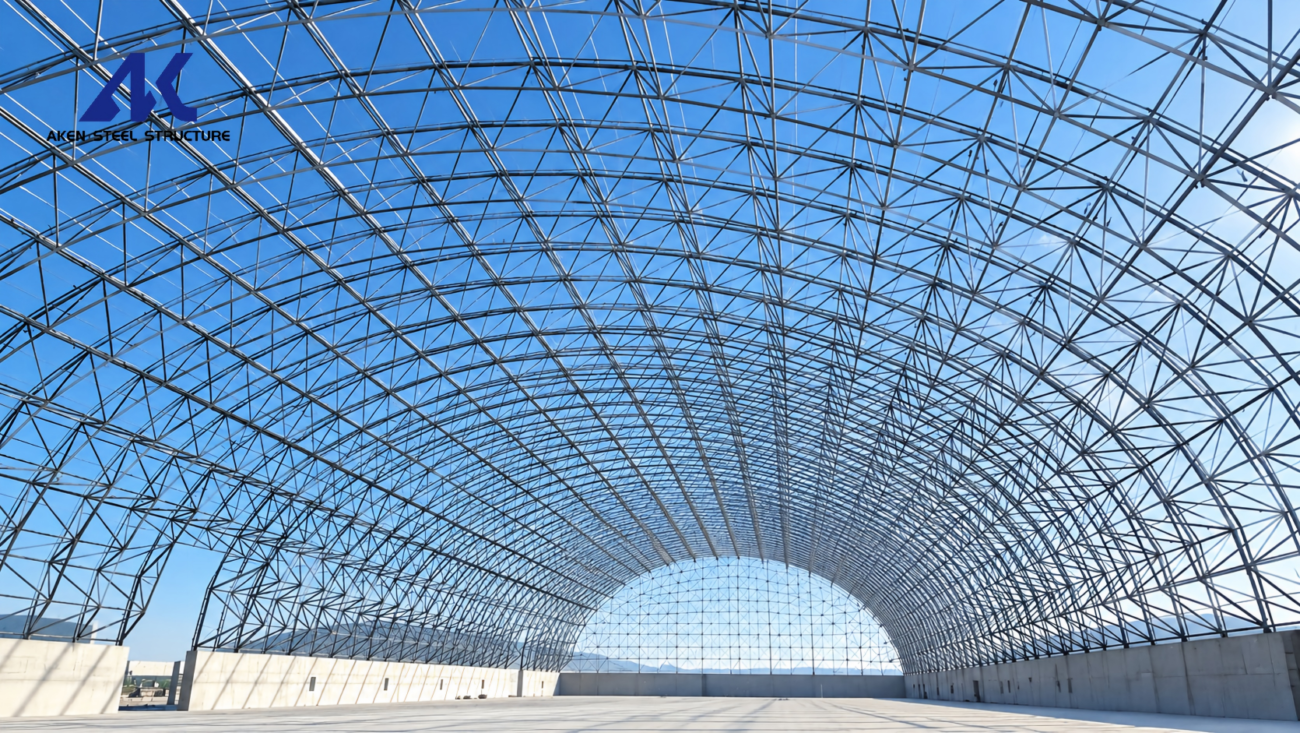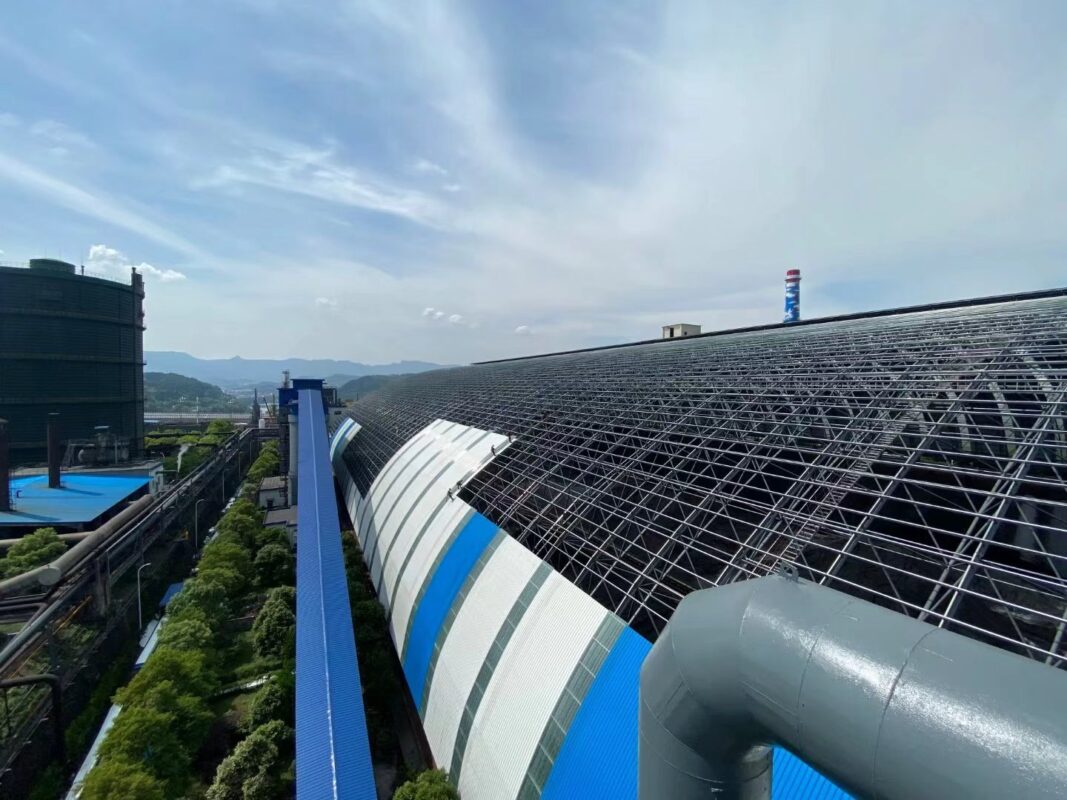


A good Raumrahmen roof starts long before the parts reach the site. Heute in chinesischen Stahlkonstruktionswerkstätten, fabrication has moved away from manual marking and hand cutting. Most plants now run digital CNC equipment, robotic welding cells and automated surface treatment lines. This guide walks through the real production steps, from raw steel pipe to finished, labelled components ready for shipment.
Digital Model First, Machining Data Second
The process begins with the structural 3D model. Engineers finish the space frame design, then export member lengths, node positions and bolt sizes straight into the workshop system.
The system splits the model into individual parts. It generates cutting lists, nesting layouts and machining parameters without retyping drawings by hand. Each member and bolt ball gets a unique part number. That number follows the part through cutting, welding, coating, packing and site erection.
This data link cuts down calculation mistakes. It also makes later inspection and replacement much easier, because every piece can be traced back to the original model.
CNC Pipe Cutting and End Profiling
Steel tubes are the main load-bearing members. Modern lines use CNC intersecting-line cutting machines rather than manual sawing.
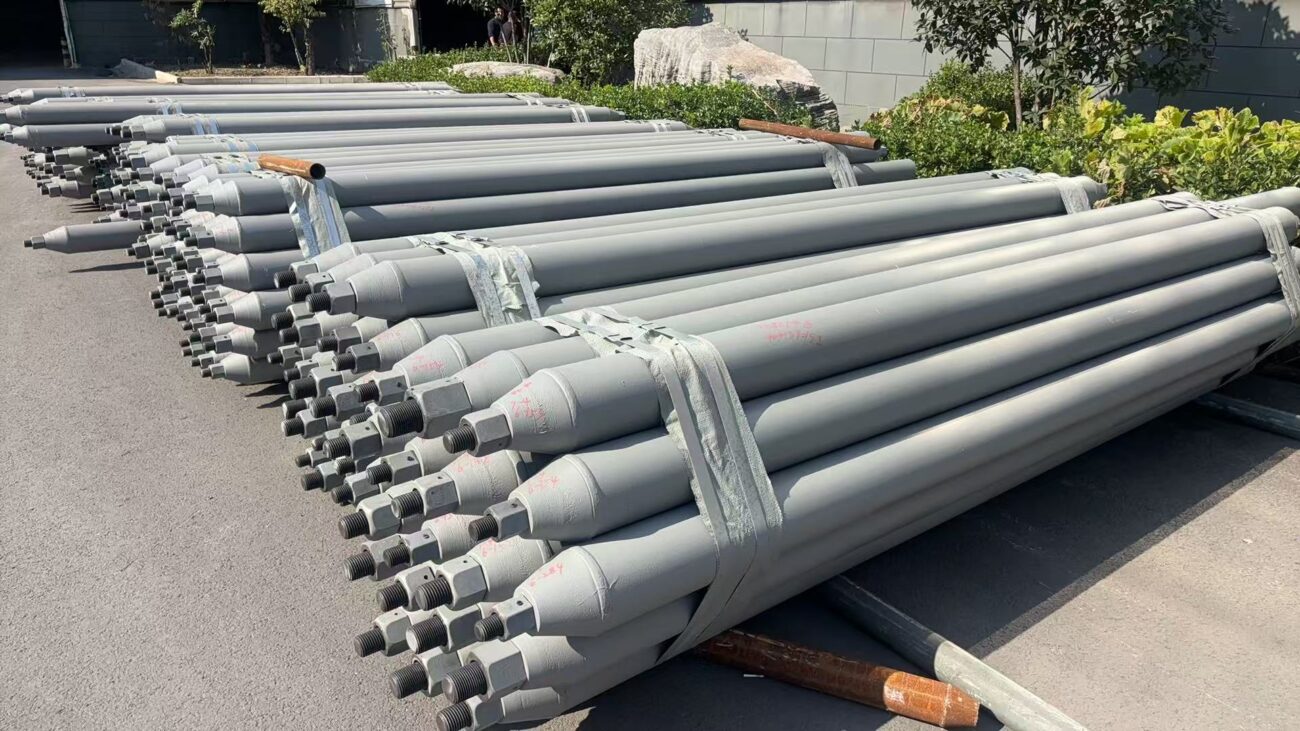
Raw seamless or welded steel pipes feed into the machine automatically. The equipment cuts each tube to the exact length, then shapes the end profile to match the bolt ball or cone. Chamfering and part marking happen in the same pass.
Typical length tolerance stays within ±0.5 mm. Clean, accurate ends matter a lot later. If a tube end does not fit the node, crews cannot force it together on site without rework.
Multi-Axis Machining of Bolt Balls
The bolt ball is the core connection of the whole grid. Its threaded holes must line up with every incoming member.
Factories use multi-axis CNC machining centers for this step. Forged steel ball blanks clamp onto the machine. A rotary index head turns the ball to each angle, then the center mills the flat, drills the hole and cuts the internal thread in one setup.
Thread quality usually reaches grade 6H. Hole angle deviation is held to around ±0.1°. Every ball gets a laser-etched code after machining, so workers can sort and install the right ball without guessing.
Robotic Welding of Cones and End Plates
Most space frame members connect to the ball through a cone or end plate. These end fittings weld onto the tube before coating.
Modern workshops place this work on robotic welding stations. The robot keeps a steady current, travel speed and weld bead along the joint. This is more consistent than hand welding, especially when the same part repeats hundreds of times.
After welding, key joints go through non-destructive testing. Common checks include ultrasonic testing for internal defects and magnetic particle or dye penetrant testing for surface cracks. Defective pieces are set aside and repaired before they move to the coating line.
Automated Blasting and Anti-Corrosion Coating
Surface treatment decides how long the frame lasts. Chinese plants usually run a closed shot blasting line before painting or galvanizing.
Steel parts go through abrasive blasting to remove mill scale, rust and oil. The surface reaches a clean Sa2.5 grade before the protective layer goes on. For standard inland projects, parts move to an automated or semi-automatic painting line for primer and topcoat.
For coastal, humid or dusty sites such as coal yards and ports, many factories offer hot-dip galvanizing or a duplex system: galvanizing first, then epoxy primer and polyurethane topcoat. Coating thickness is measured and recorded before packing.
Factory Trial Assembly and Final Inspection
Before components leave the plant, some projects include a trial assembly section. Workers put a small grid module together on the shop floor to check fit, bolt torque and overall geometry.
Final inspection covers dimensions, thread condition, coating thickness and surface defects. Material mill certificates, welding records, NDT reports and coating test reports are collected with the shipment. This documentation is often required for export customs clearance and third-party audits.
What This Means for Buyers
Modern fabrication technology does two things well. It keeps every part interchangeable, so site crews only tighten bolts and do not weld on the roof. It also shortens the production cycle for large orders, which matters for power plants, gas stations, stadiums and warehouse projects on a tight schedule.
The final member sizes, steel grade and coating still depend on local wind, snow and seismic loads. A reliable supplier should run the structural calculation first, then machine the parts to that specific design.
FAQ
Q: What steel grades are used for space frame members in China? A: Common choices are Q235B and Q355B seamless steel pipe. Bolt balls are usually forged from 45# Stahl, with 10.9S high-strength bolts.
Q: How accurate are CNC-cut space frame tubes? A: Length tolerance is generally controlled within ±0.5 mm, and end profiles match the node geometry from the 3D model.
Q: Do Chinese space frame factories provide material and inspection certificates? A: Ja. Standard export orders include mill certificates, welding records, NDT reports and coating thickness test reports.
Q: Can a factory produce custom or non-standard space frame parts? A: Ja. Modern CNC lines handle custom member lengths and node specs as long as the structural design and drawings are finalized.